
Coffee and matcha in Phuket: specialty beans, Thai iced coffee, coconut coffee and 10+ matcha drinks — what to try and what it costs
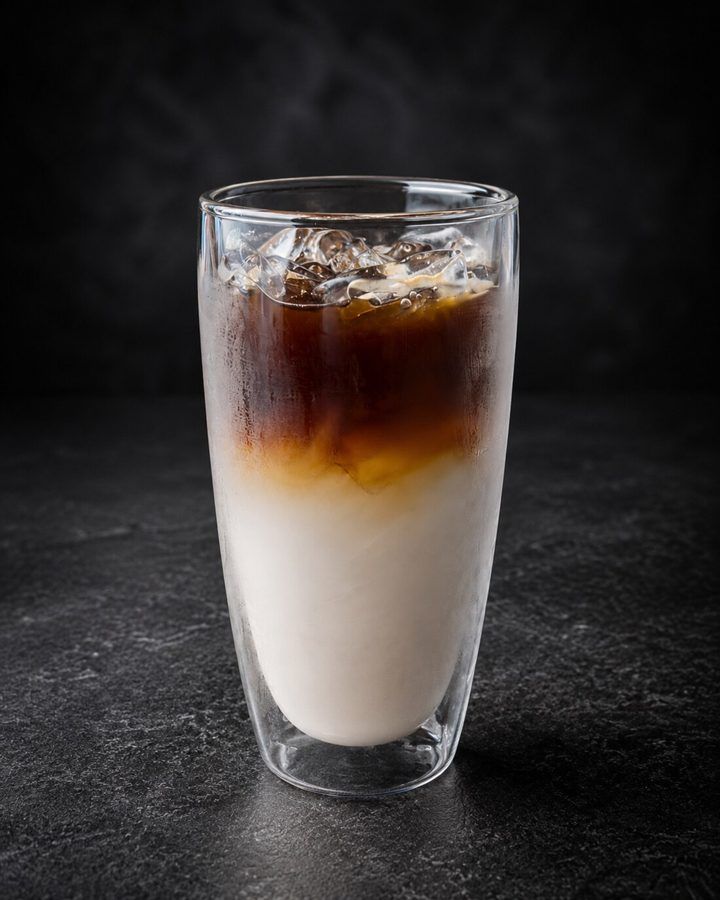
Thailand grows its own arabica in the northern mountains, so specialty coffee here is local rather than imported, and it is cheap by European standards: 69–159 ฿ a cup. Two parallel traditions sit side by side — Thai-style sweet iced coffee with condensed milk, and third-wave espresso drinks — and matcha has become just as big, with whole menu sections devoted to it. If you try three things in Phuket, make them a cold brew or iced americano, a Thai Es-Yen, and a matcha latte. All three are on our list at 58/2 Srisoonthon Road, 10:00 – 19:00, closed Thursdays.
Where does Thai coffee actually come from?
Almost all of the good stuff comes from the opposite end of the country. Thai arabica grows in the far north, in the mountains of Chiang Rai and Chiang Mai at roughly 1,000–1,500 metres, with Chiang Rai alone accounting for most of the national crop. Those hills sit at a similar latitude and altitude to parts of Ethiopia and Colombia: cool nights, mist in the morning, volcanic-rich soil.
Much of this is recent history. The high-altitude plantations began in the late 1980s as crop-replacement projects, with hill-tribe farming communities switching from opium to coffee and macadamia. Two generations later, Thai specialty lots win cupping competitions and get exported. In the cup they are typically soft and low in acidity, with chocolate, nut and stone-fruit notes — less bright than an Ethiopian, less heavy than a Sumatran.
Thailand also grows robusta, mostly in the south, and that is what goes into instant coffee and the traditional sweet iced coffee you buy from a cart. Both exist on this island, side by side, and neither is a counterfeit of the other.
On Phuket itself you will find small independent roasteries — a handful of them now roast on the island and supply the cafés here — alongside cafés buying from northern roasters in Chiang Mai and Bangkok. If you care, ask: a café that roasts or buys with intent is usually pleased to tell you the farm and the process.
What does "specialty" actually mean on a menu here?
In practice, when a Phuket café calls itself specialty it is claiming four things: beans traceable to a farm or a region rather than a commodity blend, a roast date recent enough to matter, a grinder and machine that are dialled in daily, and staff who can tell you what is in the hopper. The flip side is that "specialty" on a sign is not a certification; it is a claim. The test is boring and reliable — order a hot americano or a flat white, with no syrup to hide behind, and see what happens.
One honest shortcut: if the iced americano tastes good without sugar, the rest of the menu is probably fine too.
How do you order coffee in Thailand without surprises?
A few conventions trip up visitors on their first week.
- Hot or iced is the first question, not the last. Most drinks exist in both, and the iced version usually costs 10–20 ฿ more because it needs a second shot to survive the ice.
- Sweetness is a setting. Thai-style drinks are sweet by default. Ask for less sweet — nam-tan noi — or no sugar, and nobody will mind.
- Milk alternatives cost extra. Oat milk is +35 ฿ on any milk drink here, and that is typical for the island.
- An extra shot is +25 ฿, which is the cheapest fix for a long day.
- "Dirty" is a real drink, not a warning: a hot espresso shot poured over cold milk so the two layers meet in the glass.
- Americano means long black. If you want an espresso, say espresso — a single or a doppio.
What is Thai iced coffee — Es-Yen and Cappu-Yen?
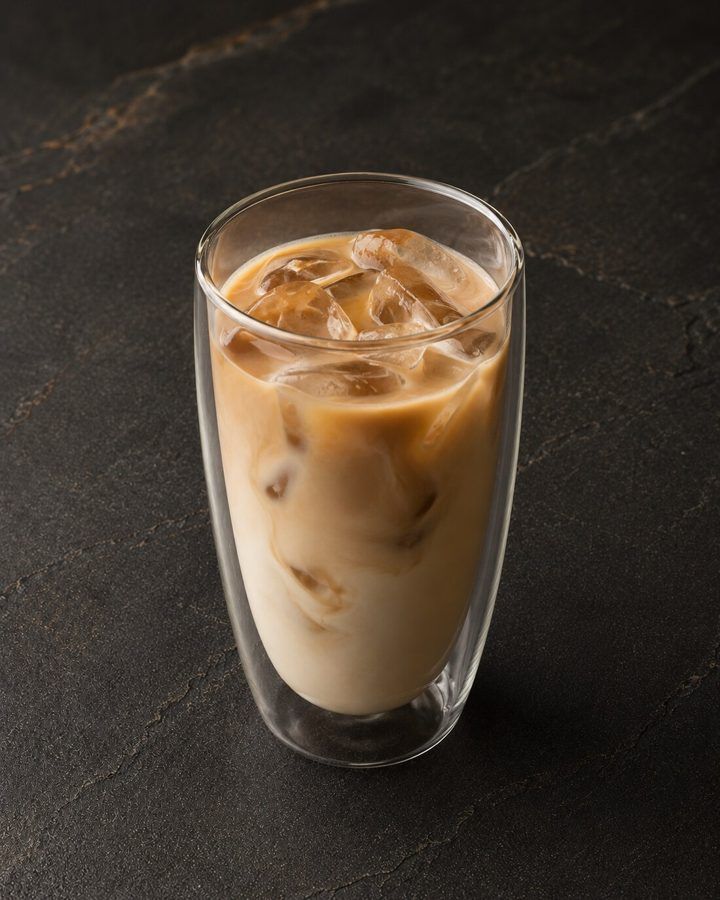
This is the tradition that existed on this island long before espresso machines arrived, and it is a completely different design brief. Es-Yen (literally "cold") is dark, strong coffee built up with condensed milk and sugar over a tall glass of ice: sweet, creamy and much stronger than it tastes. Cappu-Yen is its lighter cousin, a Thai iced cappuccino under a cap of foam. Alongside them on most Thai menus sit Thai tea — the orange one, strong and sweet — and cocoa.
Do not judge them as failed lattes. They are built to be drunk in 33°C heat and to still taste of something when the ice melts. Our prices: Es-Yen 109 ฿, Cappu-Yen 95 ฿, Thai tea 79 ฿, cocoa 89 ฿, caramel milk 99 ฿.
What is matcha, and what do the grades mean?
Matcha is green tea leaf that has been shade-grown for the last weeks before harvest, steamed, dried, stripped of stem and vein, and stone-ground into powder. You drink the leaf rather than an infusion of it, which is why it tastes thicker than tea and why quality is so visible in the cup.
The grades you will see on menus, in rough order:
- Ceremonial grade. Youngest first-harvest leaves, vivid green, sweet and smooth enough to drink with water alone.
- Premium grade. A mix of first and second harvest — good aroma, a little more edge, and what most good matcha lattes are actually made with.
- Culinary grade. Older leaves, bolder and more bitter, designed to survive baking, sugar and ice. Nothing wrong with it in a cake; thin and grassy on its own.
A warning worth having: vivid green is not the same as good, and a dull, yellowish, sawdust-coloured powder is a bad sign, but plenty of mediocre matcha is dyed bright by sugar and milk powder. The tell is the finish — good matcha ends sweet and savoury, bad matcha ends dry and bitter at the back of the throat.
How is matcha prepared, and should you have it hot or iced?
Properly, the powder is sifted, whisked with water just off the boil — never boiling, which scorches it — until it has a fine foam, and then either drunk as it is (usucha) or poured over milk for a latte. The whisking is not theatre: unwhisked matcha clumps and tastes gritty.
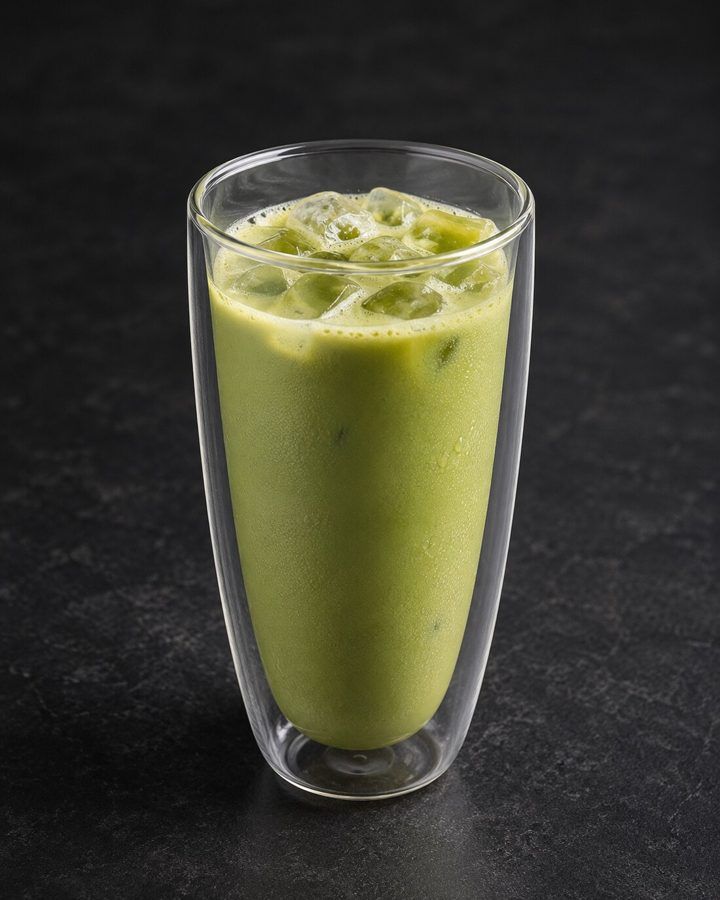
Hot shows you the tea. Iced shows you the sweetness, and in this climate iced wins most days. Our matcha section runs beyond the latte in two directions — flavoured (coconut, yuzu and honey, orange, strawberry, butterfly pea, lemon soda) and other Japanese greens: genmaicha, which is green tea with toasted rice and tastes faintly of popcorn, and houjicha, which is roasted and tastes of caramel and wood rather than grass. If you think you dislike matcha, houjicha is the one to try.
What is on the list here, and what does it cost?
Prices in Thai baht, 7% VAT included. The full menu with photos is on the main page.
- Black coffee. Espresso 69 ฿ (doppio 79 ฿), ristretto 69 ฿, lungo 79 ฿, hot americano 89 ฿, iced americano 99 ฿.
- Coffee with milk. Hot latte 99 ฿, iced latte 119 ฿, cappuccino 89 / 109 ฿, flat white 99 ฿, piccolo 89 ฿, macchiato 79 ฿, mocha 109–129 ฿, caramel macchiato 139 ฿, dirty 119 ฿. Oat milk +35 ฿, extra shot +25 ฿.
- Thai style. Es-Yen 109 ฿, Cappu-Yen 95 ฿, Thai tea 79 ฿, cocoa 89 ฿, caramel milk 99 ฿, iced tea 89 ฿, a refillable 400 ml pot of hot tea 99 ฿.
- NIMA signature, all iced. Coconut coffee 139 ฿ (espresso over young coconut water), orange coffee 139 ฿, Sunset 139 ฿ (layered red, orange and gold), Nima Signature 149 ฿ with lychee, pomegranate and pineapple.
- Matcha bar. Matcha latte 99 ฿, premium matcha latte 159 ฿, coconut matcha 129 ฿, snowy berry matcha 139 ฿, matcha yuzu honey bee 129 ฿, orange matcha 129 ฿, butterfly pea matcha 129 ฿, matcha lemon soda 119 ฿, genmaicha latte 129 ฿, houjicha latte 135 ฿, clear matcha 99 ฿, clear genmaicha 99 ฿.
- Sodas, homemade. Strawberry, peach, honey lemon, samed daeng (pomegranate) and tabaek (butterfly pea with lemon), all 99 ฿; non-alcoholic mojito 119 ฿; soda water 30 ฿.
- Shakes. Orange, watermelon, pineapple, banana, apple and dragonfruit 99 ฿; mango 119 ฿; chocolate milk shake 109 ฿.
- Fresh juices, squeezed to order, no sugar. Orange, apple, pineapple and carrot, 119 ฿ each.
So: a decent coffee is 69–159 ฿, matcha and signature drinks 99–159 ฿, shakes and sodas 99–119 ฿. Cards, PromptPay / Thai QR and cash all work.
What should you drink before or after the beach?
Honestly, not coffee. Caffeine and a diuretic in 33°C heat is a bad combination with two hours of sun. The fresh juices at 119 ฿ are squeezed to order with no added sugar, which is the thing your body is asking for; the fruit shakes at 99 ฿ are the same fruit blended with ice and a little sweetness, and they travel better in a car. Watermelon and orange are the two that disappear fastest on a hot afternoon. If you want caffeine plus hydration, the coconut coffee is a reasonable compromise and the clear matcha at 99 ฿ is a very light one.
How much caffeine is in all of this?
Roughly, and useful to know if you drink four of them: a single espresso is about 60–80 mg of caffeine, a double americano twice that. A 2 g serving of good matcha is in the same range as a single espresso — matcha is not a low-caffeine drink, which surprises people. What differs is the delivery: matcha also carries L-theanine, which is why the same amount of caffeine tends to feel steadier and less spiky. Thai iced coffee is strong, and the sugar makes it easy to drink three. Decaf is rare on this island; if you need it, ask before you order rather than after.
Can you take it away?
Yes, and on a beach day that is usually the point. Call ahead on +66 98 067 2795 and it will be sealed and bagged when you arrive — iced drinks travel fine for twenty minutes, matcha lattes want a shake before you drink them, and anything with foam is better drunk in. Delivery is coming soon. We are 10:00 – 19:00, closed every Thursday, which is the detail that catches people out around here.
How to get here
- Address
- 58/2 Srisoonthon Road, Choeng Thale (Cherngtalay), Thalang, Phuket 83110
- Hours
- 10:00 – 19:00 · closed every Thursday
- Phone
- +66 98 067 2795
- Nearby
- 1 km from Surin Beach · 2 km from Bang Tao Beach, Boat Avenue and Laguna Phuket · 3 km from Kamala
- Parking
- Free street parking at the door; scooters at the entrance
- Good to know
- Halal, no alcohol · free Wi-Fi, laptop-friendly · cards, PromptPay / QR and cash · takeaway available
Coming from Bang Tao, Boat Avenue or Laguna, head south on Srisoonthon Road towards the Surin junction — about five minutes by car, taxi or Grab. From Surin Beach, drive inland and we are on your left after roughly a kilometre.
Questions & answers
How much does a coffee cost in Phuket?
A roadside kiosk iced coffee is usually 40–60 ฿; a specialty café is roughly 90–160 ฿. Here: espresso 69 ฿, ristretto 69 ฿, lungo 79 ฿, hot americano 89 ฿, iced americano 99 ฿, hot latte 99 ฿, iced latte 119 ฿, flat white 99 ฿, cappuccino 89–109 ฿, mocha 109–129 ฿. Oat milk +35 ฿, extra shot +25 ฿. All prices include 7% VAT.
Where does Thai coffee come from, and is it any good?
Almost all Thai arabica is grown in the far north, in the mountains of Chiang Rai and Chiang Mai at roughly 1,000–1,500 metres — Chiang Rai alone accounts for most of the national crop. Much of it started as opium-replacement planting in the late 1980s and is now genuinely good specialty coffee: typically soft and low in acidity, with chocolate, nut and stone-fruit notes. Robusta from the south of Thailand mostly goes into instant coffee and traditional sweet iced coffee.
What is Thai iced coffee, and how is it different from an iced latte?
Thai iced coffee, often called Es-Yen or Oliang-style, is built for sweetness and strength: dark coffee with condensed milk, sugar and sometimes evaporated milk, poured over a lot of ice. An iced latte is espresso and cold milk with no sugar unless you ask. Both are worth drinking, but they are different drinks. Here, Es-Yen is 109 ฿, Cappu-Yen 95 ฿ and Thai tea 79 ฿; the iced latte is 119 ฿. If you prefer less sugar, say "less sweet" — nam-tan noi — when you order.
Do you have matcha, and which one should a beginner try?
Yes — more than ten matcha drinks. Start with the matcha latte at 99 ฿, which is matcha whisked and poured over milk, mellow and not bitter. If you like it, the premium matcha latte at 159 ฿ uses a finer grade with more aroma and less edge. Coconut matcha is 129 ฿, snowy berry 139 ฿, matcha yuzu honey bee 129 ฿, orange matcha 129 ฿, butterfly pea 129 ฿ and matcha lemon soda 119 ฿. Clear matcha at 99 ฿ is matcha whisked with water alone, with no milk at all.
Can I get oat milk or a dairy-free drink?
Yes. Oat milk can go into any milk drink, coffee or matcha, for +35 ฿. Fully dairy-free without any substitution: coconut coffee at 139 ฿, which is espresso with young coconut water, clear matcha at 99 ฿, the fresh juices at 119 ฿, the sodas at 99 ฿ and the americanos. Everything we serve is halal, with no alcohol anywhere on the drinks list — the mojito is non-alcoholic.
Espresso machine, whisk and juicer are all on until seven. Thursday they are not.